
By Dr. Sheena M. Harmon, MD (Obstetrics & Gynecology) · Medically reviewed by Dr. Ian G. Beckford, MD (Family Medicine)
Buy Diflucan online — fluconazole is the versatile antifungal that clears Candida behind yeast infections, oral thrush and internal flare-ups. A single tablet often clears a yeast infection on its own. Longer courses take on oral thrush, skin yeast, and the fungal infections that settle deeper inside the body.
What Diflucan Is and What It Treats
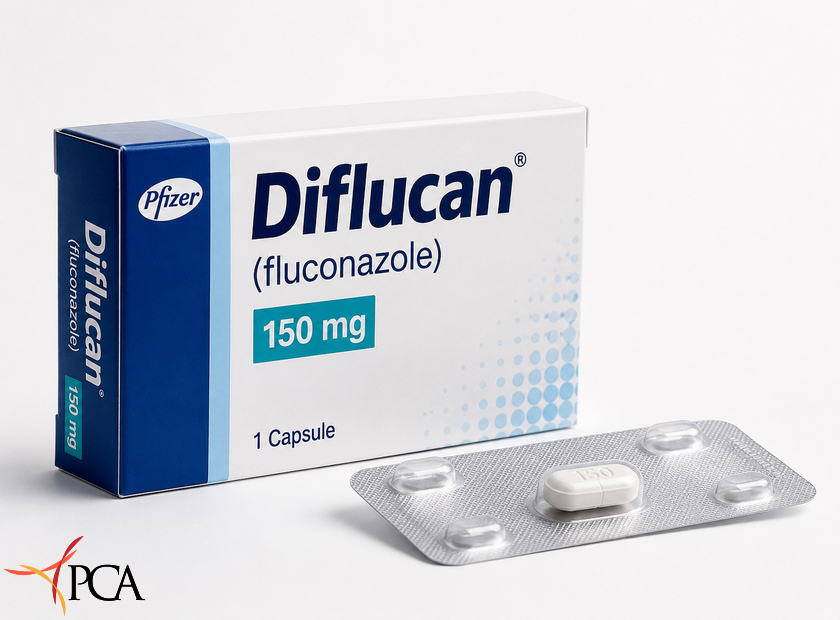
Diflucan is the brand name for fluconazole. It is an oral antifungal medicine. Doctors use it for infections caused by yeast and other fungi. It does not work like an antibiotic. It targets fungal cells, especially Candida.
Most people know Diflucan because of vaginal yeast infections. That is the most common reason patients hear about it. Still, fluconazole has wider uses. Clinicians may prescribe it for oral thrush. They may also use it for throat Candida, esophageal candidiasis, and some deeper fungal infections. You can read a plain overview on MedlinePlus.
If you plan to buy Diflucan online, the safe route still starts with a valid prescription. A real service should review your symptoms first. It should also check your health history and current medicines. That matters because itching, burning, or discharge can have more than one cause. Treating the wrong problem can delay the care you actually need.
Diflucan at a glance
Active ingredient
Fluconazole
Medication class
Oral azole antifungal
Common use
Vaginal yeast infections and other Candida infections
Common strength
150 mg for some vaginal yeast infection prescriptions
Access rules
Prescription-only in the United States
Does not treat
Bacterial or viral infections
The box gives a quick overview. It is not a dosing plan. The right dose depends on the infection. It also depends on your health and the prescriber’s instructions. A simple vaginal yeast infection may need one approach. Oral thrush or deeper Candida infection may need another.
Fluconazole only works when the target is fungal. It will not treat a cold. It will not treat the flu, a urinary tract infection, or bacterial vaginosis. Diagnosis matters for that reason. A clinician may ask about symptoms, recent antibiotics, pregnancy, other medicines, and repeat infections.
How Fluconazole Slows Yeast Growth
Fluconazole weakens fungal cells. Yeast needs a substance called ergosterol. It helps keep the outer membrane strong. The medicine blocks a key step in making ergosterol. As the membrane weakens, the yeast has a harder time growing.
This action is focused on fungi. Human cells do not use ergosterol in the same way. That is why fluconazole can target yeast without acting like a broad poison. According to Mayo Clinic, fluconazole works by killing the fungus or stopping its growth.
Relief is not always instant. Even after one dose, the medicine keeps working for a while. Symptoms may ease as the yeast level drops. Irritated tissue also needs time to calm down. If symptoms get worse, return quickly, or do not improve, a clinician should review the situation again.
Diflucan and Its Generic Name Fluconazole
Diflucan and fluconazole are closely linked. Diflucan is the brand name. Fluconazole is the active ingredient inside the medicine. So if a pharmacy gives you generic fluconazole, it is usually the same active treatment under a different label. The package may change, but the main medicine does not.
This naming can confuse patients. A clinician may say Diflucan, while the bottle says fluconazole. A refill may also look different from the last one. The tablet shape or color can change between manufacturers. In most cases, that does not mean anything is wrong. It usually means the pharmacy filled the prescription with a generic version.
Generic fluconazole is common because it often costs less. Many patients receive it instead of the brand. The inactive ingredients may vary. The tablet may also look different. The important part is the amount of active fluconazole. That must meet the same standards for the prescribed strength.
Some people search for the cheaper generic refill online. The safety rules do not change. Use a licensed pharmacy. Keep a valid prescription. Make sure a real pharmacist is available for questions. Any site that skips the prescription step should be treated as a warning sign, no matter what name appears on the label.
Diflucan for Vaginal Yeast Infection
Vaginal yeast infection is the most common reason people hear about Diflucan. It happens when Candida grows too much in the vaginal area. Candida can live there in small amounts. Trouble starts when the balance changes. The usual symptoms are itching, burning, redness, and thick white discharge. Some people also feel soreness during sex or when they urinate. The discomfort can build quickly. It can also feel stronger than expected. For some uncomplicated cases, fluconazole is taken as one 150 mg tablet. That is one reason people like this option. There is no cream to insert. There is no multi-day routine to follow. Still, the dose should match the prescription label.
Many patients also ask, can you buy diflucan over the counter. In the United States, Diflucan and generic fluconazole require a prescription. OTC yeast infection products are usually topical creams or suppositories. They are not the same as oral fluconazole. Relief does not happen right away. Some people feel better within one to three days. The itching may calm down first. Discharge can take longer to settle. If symptoms do not improve, a clinician should review the case. Repeating the pill on your own is not the safest plan.
Antibiotics are a common trigger. They can clear harmful bacteria. They can also disturb the normal bacteria that help keep yeast under control. After that shift, Candida may grow more easily. Some people notice a yeast infection soon after an antibiotic course.
Ways to lower repeat yeast infection risk
- Tell your clinician if antibiotics often lead to yeast symptoms.
- Avoid douches and heavily scented vaginal products.
- Change out of damp workout clothes or swimwear soon after use.
- Keep blood sugar managed if you have diabetes.
- Ask about testing if symptoms keep coming back.
- Do not keep repeating treatment if the diagnosis is unclear.
Many simple infections respond well. Others do not follow the usual pattern. Symptoms may come back, last too long, or feel different from a classic yeast infection. In that case, the problem may need a closer look. It may not be yeast at all.
When Symptoms May Not Be a Yeast Infection
Not every itch or discharge means a yeast infection. Several conditions can feel similar. They may need a different treatment. Fluconazole will not help if the cause is not fungal. That is why the right diagnosis matters.
The symptom pattern gives the first clue. Yeast often causes strong itching, redness, and thick white discharge. A fishy odor or thin gray discharge may point to something else. Burning when you urinate can also come from another problem. These details help a clinician narrow down the cause.
Self-diagnosis is not always reliable. Many people treat themselves for yeast and later find out the cause was different. A medical review can prevent the wrong treatment. It can also catch infections that need faster care.
Some signs deserve extra attention. A fishy odor may suggest bacterial vaginosis. Burning with frequent urination may point to a urinary tract infection. Pelvic pain, fever, bleeding, or symptoms that keep returning should not be guessed at. In those cases, it is better to get checked.
Yeast Infection vs Bacterial Vaginosis
Bacterial vaginosis is often confused with yeast. The symptoms can overlap. The cause is different, though. A yeast infection is fungal. Bacterial vaginosis comes from a shift in vaginal bacteria. Because of that, fluconazole cannot treat BV.
The treatments are different as well. Yeast infections need an antifungal when treatment is appropriate. Bacterial vaginosis usually needs an antibiotic, such as metronidazole. Taking the wrong medicine can leave the real problem untreated. Symptoms may then continue or come back quickly.
A urinary tract infection can also feel similar at first. It may cause burning and urgency. But a UTI starts in the urinary tract. It is not a vaginal yeast infection. When symptoms are unclear, a short evaluation can point treatment in the right direction.
Diflucan for Oral Thrush and Other Candida
Candida can grow in more than one part of the body. When it overgrows in the mouth, it can cause oral thrush. White patches may appear on the tongue, cheeks, or throat. The area can feel sore, dry, or irritated.
Fluconazole may be used when a local treatment is not enough. A clinician may also choose it when the infection is harder to clear. Oral thrush is not always just a mouth problem. It can point to a wider health issue.
Some people have a higher risk of thrush. Recent antibiotics can change the normal balance in the mouth. Inhaled steroids for asthma can also play a role. Diabetes, a weakened immune system, infancy, and older age may raise the risk too.
Candida infections Diflucan may be used for
- Oral thrush, when Candida affects the mouth or tongue.
- Throat Candida, which may cause soreness or trouble swallowing.
- Esophageal candidiasis, when the infection reaches the food pipe.
- Selected urinary Candida infections, when confirmed by a clinician.
- Serious Candida infections in the bloodstream or internal organs.
- Certain fungal meningitis cases, under specialist medical care.
Deeper infections need more caution. Esophageal candidiasis can make swallowing painful. It is not treated like a simple vaginal yeast infection. It usually needs a longer plan and closer follow-up.
Bloodstream or internal Candida infections are more serious. They are managed under medical supervision. The same is true for fungal meningitis. These conditions are not self-treated with a single tablet.
The treatment plan depends on the infection site. It also depends on the person’s immune system and other health risks. A mild mouth infection is very different from a deep Candida infection. That is why the dose, length, and follow-up should come from a clinician.
Diflucan Prescription and OTC Status
A common first question is simple: can you skip the doctor? Many people ask, can you buy Diflucan over the counter? In the United States, the honest answer is no. Oral fluconazole is prescription-only. A licensed clinician must approve it before a pharmacy can dispense it.
The confusion makes sense. The yeast infection aisle has many products you can buy without a prescription. Those are usually topical antifungals, such as creams or suppositories. They are not the same as the fluconazole pill. They may treat the same type of infection, but they work in a different way.
So if you are asking, can I buy Diflucan over the counter as a tablet, the form is the key difference. A cream works locally. A pill works from inside the body. Some people prefer the convenience of one tablet. Still, that tablet needs a prescription.
This is where an online visit may help. You do not need to guess or search blindly. A clinician can review your symptoms, health history, and current medicines. If fluconazole is appropriate, you can buy Diflucan online from a licensed pharmacy after the prescription is approved. The process may move online, but the prescription rule still stays in place.
Diflucan pricing
Generic fluconazole, same as Diflucan — prices per 90-tablet pack
| Strength | Per pill | You save | Per pack |
|---|---|---|---|
| Diflucan 50 mg | $0.85 | $36.03 | $112.58$76.55 |
| Diflucan 100 mg | $1.15 | $51.08 | $154.80$103.72 |
| Diflucan 150 mg | $1.45 | $64.12 | $194.29$130.17 |
| Diflucan 200 mg | $2.17 | $113.37 | $308.49$195.12 |
| Diflucan 400 mg | $3.83 | $169.88 | $514.80$344.92 |
Buy Diflucan Online: Prices and Savings
Fluconazole is usually not an expensive prescription. The generic version has been available for years, so the price is often lower than many brand-name medicines. When you buy Diflucan online, the final cost can depend on the pharmacy, the strength, and the quantity on the prescription. Larger prescribed packs may also lower the price per pill.
Brand and generic pricing make the biggest difference. Branded Diflucan usually costs more than generic fluconazole. The active ingredient is the same, but the label and price can be different. Insurance may also change the final amount. Some plans cover part of the cost, while others use a fixed copay.
An online visit may include more than the medicine itself. The total price can include the clinician review, the prescription, and shipping. In many cases, the tablet is not the most expensive part. The main benefit is often convenience. You handle the visit, prescription review, and pharmacy step in one process.
It helps to compare the per-pill price. The total pack price can look higher at first. Still, each tablet may cost less in a larger prescribed quantity. That is why the pricing table above shows the per-pill cost for each option, including the 150 mg strength many patients recognize.
The Clinicians Reviewing Your Request
A licensed provider reviews every request before a pharmacy fills it. Yeast and Candida questions sit between women’s health and everyday primary care, so this page leans on both. One brings the gynecologic view of vaginal yeast and pregnancy; the other handles oral thrush, antibiotic-triggered infections, and the wider Candida picture.


Phone: (404) 351-7900 · Online visit: Start a telehealth visit
How to Get Diflucan in Three Steps
Telehealth makes a yeast infection visit fast and private. Instead of waiting days for an appointment, you answer a few questions online and speak with a clinician. If fluconazole is appropriate, the prescription goes to a pharmacy. The whole process can fit into a single afternoon.
The steps to buy Diflucan online still follow the same safety rules as an office visit. A telehealth appointment does not remove the medical review behind the prescription. It simply moves that review onto a screen. A licensed clinician is still the one who decides whether the medication fits.
What ordering with us looks like
Secure HIPAA-encrypted records and clinician messaging are part of every visit. Your provider stays reachable if symptoms change.
Diflucan Dosage and the 150 mg Single Dose
The best-known Diflucan dose is one 150 mg tablet. It is often used for an uncomplicated vaginal yeast infection. The dose is simple. You take one tablet by mouth, with or without food. Then the medicine keeps working in the body.
That does not mean every Candida infection uses the same plan. Oral thrush, recurrent yeast infections, and deeper Candida infections may need more time. Some cases need daily treatment. Others need follow-up or testing first. The right plan depends on the diagnosis.
Common fluconazole dosing patterns
Vaginal yeast infection
A single 150 mg tablet is a common prescription pattern for uncomplicated cases. This is the dose many patients recognize.
Recurrent yeast infections
Repeat symptoms need a different plan. A clinician may use spaced doses, testing, or a maintenance schedule.
Oral thrush
Thrush often needs treatment for several days or longer. The dose and length depend on the person and the infection.
Esophageal candidiasis
Candida in the food pipe is more serious. It usually needs a longer course and closer medical follow-up.
These patterns are general. They are not a personal prescription. Your clinician may adjust the dose for kidney function, other medicines, and the severity of the infection. According to Cleveland Clinic, fluconazole should be taken exactly as directed and for the full length prescribed.
Do not change the dose on your own. Do not repeat tablets just because symptoms are still present. If the treatment is not working, the diagnosis may need another look. The infection may also need a different plan.
A missed dose matters most during a multi-day course. If you forget one, follow the pharmacy label or ask a pharmacist. Do not double the next dose unless a clinician tells you to. For a single 150 mg prescription, there is no daily schedule after that first tablet.
How to Take Diflucan Safely
Taking fluconazole safely starts with the prescription label. Follow the dose exactly. Swallow the tablet with a glass of water. If you have a multi-day course, take it at the same time each day. This helps you stay on schedule.
Do not stop early just because you feel better. Some infections need the full course to clear. Stopping too soon can let symptoms return. If the medicine does not seem to work, ask your clinician what to do next.
Alcohol is a common concern. A single drink is not usually the main issue. Heavy drinking is different. Both alcohol and fluconazole involve the liver. For that reason, it is safer to limit alcohol during treatment. This matters even more with longer courses.
Tell your clinician about your health history before starting. Liver problems, kidney problems, and heart rhythm issues can change the plan. Your medication list matters too. Some drugs do not mix well with fluconazole. Those interactions need a closer look.
Taking Diflucan With or Without Food
You can take Diflucan with or without food. Food does not usually change how well fluconazole works. Choose the time that is easiest to remember. For a single-dose prescription, that makes the process simple.
If your stomach feels sensitive, take it with a small snack. That may make nausea less likely. Drink water with the tablet unless your clinician gives other instructions.
Some people use the liquid form instead of tablets. Shake the bottle well before each dose. Measure it with the device from the pharmacy. Do not use a kitchen spoon. It may give the wrong amount.
How Long Diflucan Takes to Work
Fluconazole does not work the second you swallow it. The medicine needs time to move through the body. It also needs time to reach the infection. Some people notice early relief within a day. Fuller improvement may take a few more days.
The timing depends on the infection. A simple vaginal yeast infection may start to ease within one to two days. Oral thrush can take longer. Deeper Candida infections usually need a full course. More severe infections also improve more slowly.
Do not give up too early. Some symptoms need time to calm down. But do not wait forever either. If nothing improves after about three days, contact a clinician. The infection may need a different plan. The symptoms may also have another cause.
How Long Diflucan Stays in Your System
Fluconazole stays in the body longer than many common pills. Its half-life is about 30 hours. That means part of the dose is still active more than a day later. The medicine can take several days to leave the body fully.
This long action is one reason the 150 mg tablet can work as a single dose for some vaginal yeast infections. The pill keeps working after you take it. Relief may continue to build as the medicine stays active.
The same long action is also why repeat doses should not be guessed. A clinician may space doses out on purpose. Taking extra tablets too soon can raise the risk of side effects. Follow the prescription label, and ask before changing the plan.
Diflucan Side Effects and Safety Warnings
Most people tolerate fluconazole well. This is especially true with a single 150 mg dose. Side effects can still happen, but they are often mild. Headache, nausea, stomach upset, and diarrhea are among the more common ones.
A longer course can make side effects more likely. The same is true with higher doses. That does not mean a problem will happen. It only means you should pay attention to how you feel during treatment.
The goal is simple. Know what can be expected. Also know when to ask for help. A mild headache is one thing. A spreading rash, yellowing skin, or fainting is different. Those signs need medical attention.
Some reactions are less common but more important. They do not happen to most people. Still, it helps to know the warning signs. Do not wait for a routine visit if something feels sudden, strong, or unusual.
Warning signs to take seriously
Possible liver signs: yellowing skin or eyes, dark urine, pale stools, unusual tiredness, loss of appetite, or pain in the upper right stomach.
Heart rhythm symptoms: a fast, fluttering, or uneven heartbeat, chest discomfort, fainting, or feeling like you may pass out.
Allergic reaction signs: swelling of the face, lips, tongue, or throat, trouble breathing, hives, or a rash that spreads quickly.
Severe skin reaction signs: blistering, peeling skin, mouth sores, or a painful rash with fever.
These warnings should not make fluconazole sound frightening. Most people use it without serious problems. The point is to separate common discomfort from signs that need help.
Risk can be higher with repeated doses or longer treatment. It can also rise when fluconazole is combined with certain medicines. Liver disease, kidney disease, and heart rhythm problems can also change the safety picture. That is why your clinician should know your health history before treatment starts.
If you think you had a serious reaction, tell a healthcare professional. You can also report it through the FDA MedWatch program. For general patient information on fluconazole, see MedlinePlus. For label-level details, see the DailyMed fluconazole labels.
Diflucan Interactions to Check First
Fluconazole can interact with many medicines. This happens because it affects how the liver breaks down certain drugs. Some medicines may stay in the body longer than expected. Their effect can become stronger too.
That is why your clinician needs the full list before treatment starts. Include prescription medicines, over-the-counter products, vitamins, and supplements. Small details can matter here. A pharmacist can also help check for problems.
Some interactions need extra care. Blood thinners such as warfarin may become stronger. That can raise bleeding risk. Certain statins, diabetes medicines, and heart rhythm drugs may also need review. A few medicines should not be taken with fluconazole at all.
Heart rhythm is one area to mention clearly. Fluconazole can affect the electrical rhythm of the heart in some people. Other medicines can do the same. Taking them together may increase the risk of an irregular heartbeat. This is more important if you already have heart rhythm problems.
The safest habit is simple. Keep an updated list of everything you take. Bring it to medical visits and pharmacy pickups. Do not start, stop, or combine medicines without asking first. A quick check can prevent a small treatment from becoming more complicated.
Diflucan During Pregnancy and Breastfeeding
Pregnancy changes how fluconazole is considered. Even a single low dose should be discussed with a clinician first. The decision depends on the symptoms, the diagnosis, and the stage of pregnancy. It also depends on whether safer local options may work.
Higher or repeated doses need more caution. They are not treated the same as one tablet for a simple infection. Some studies have linked larger or longer exposure to pregnancy risks. For that reason, clinicians often avoid oral fluconazole during pregnancy unless there is a clear medical need.
Topical antifungals are often preferred during pregnancy. These include creams or suppositories. They treat the infection locally. That means less whole-body exposure than an oral tablet. The best choice still depends on the person and the infection.
Contraception may also matter in some cases. This is more relevant with longer or higher-dose treatment. A clinician may advise effective birth control during treatment and for a short time after. According to MotherToBaby, the label recommends avoiding fluconazole in pregnancy except for severe or life-threatening fungal infections.
Breastfeeding is usually a more reassuring topic. Small amounts of fluconazole can pass into breast milk. Many clinicians still consider it compatible with nursing, especially for short treatment. The safest answer should come from the clinician who knows the full situation.
Patient Questions About Diflucan
Is Diflucan an antibiotic?
No. Diflucan is an antifungal, not an antibiotic. Antibiotics target bacteria. Fluconazole targets yeast and other fungi. The two are not interchangeable. In some cases, antibiotics can even trigger yeast symptoms by changing the body’s normal balance. Long acne courses are the classic example, since doxycycline often runs for months at a stretch. Skin that keeps relapsing on antibiotics is usually moved to isotretinoin instead.
Can you use a vaginal cream while taking Diflucan?
Sometimes, but it is better to ask first. Diflucan works from inside the body, while creams work locally. Some people use a cream for outside itching while the tablet starts working. Still, extra products can irritate sensitive skin. A clinician or pharmacist can tell you what is safe to combine.
Can men take Diflucan?
Yes. Men can take fluconazole when a clinician prescribes it. Vaginal yeast infections are the most common reason people hear about Diflucan, but Candida can affect men too. Oral thrush, skin yeast, and genital yeast infections may all need treatment in some cases.
Should a partner be checked if yeast symptoms keep coming back?
Sometimes, yes. Yeast infections are not always handled like a typical transmitted infection. Still, repeat symptoms can be a reason to ask about partner symptoms, irritation, or reinfection patterns. A clinician can decide whether anyone else should be checked or treated.
Can Diflucan treat a urinary tract infection?
Usually not. Most urinary tract infections are caused by bacteria. Those usually need an antibiotic, not an antifungal. Fluconazole is only used for selected fungal urinary infections when Candida is confirmed. Burning during urination should be checked instead of assumed.
Can one Diflucan tablet treat every Candida infection?
No. One 150 mg tablet is a common approach for some uncomplicated vaginal yeast infections. Other Candida infections can need a longer course. Oral thrush, esophageal candidiasis, recurrent infections, and deeper infections are handled differently. The dose should match the diagnosis.
About The Author

Disclaimer
This article is for educational purposes only. It does not constitute medical advice. Diflucan and generic fluconazole are prescription medications. They must be evaluated and prescribed by a licensed clinician. Always discuss your symptoms and current medications with a qualified healthcare professional before starting any new therapy.