

By Dr. Ian G. Beckford, MD (Family Medicine) · Medically reviewed by Dr. Sheena M. Harmon, MD (Obstetrics & Gynecology)
Buy Cytotec online with a real prescription and learn how misoprostol prevents NSAID-induced stomach ulcers and supports guided obstetric care. Most people meet this medication in one of two very different settings. For some, it protects the stomach during long-term pain treatment. For others, it plays a supervised role in pregnancy care. One tablet, two purposes, and plenty of confusion between them. This guide sorts them out, starting with the stomach.
What Cytotec Is and How Misoprostol Works
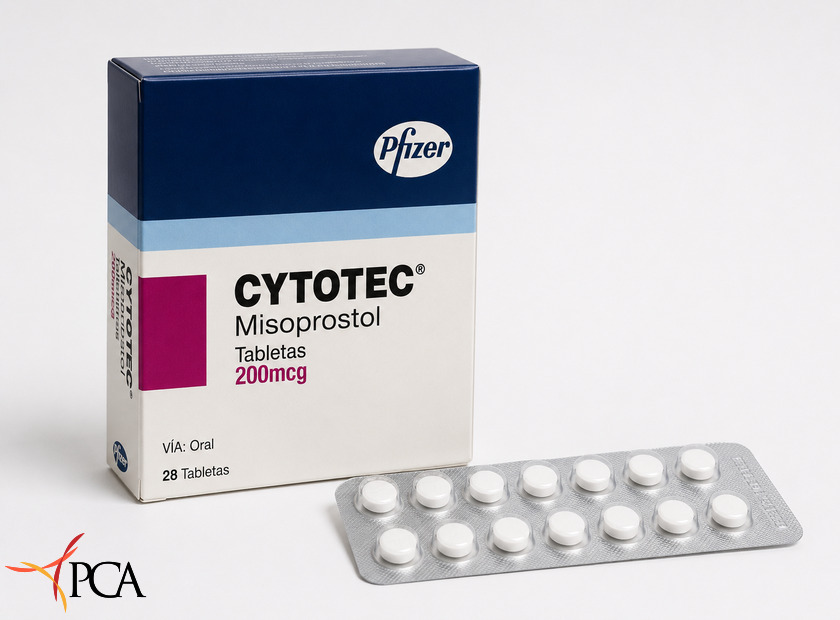
Cytotec is a prescription tablet whose only original FDA-approved job is preventing stomach ulcers. Those ulcers form in people who take nonsteroidal anti-inflammatory medicines, or NSAIDs, for long stretches. Patients who buy Cytotec online through a licensed telehealth visit still need a clinician to confirm the ulcer risk first. The active ingredient is misoprostol, a lab-made copy of a natural body compound called prostaglandin E1. That single molecule sits behind every use this medication has, from the stomach to the delivery room.
The stomach makes its own prostaglandins to defend its lining. They boost protective mucus, raise bicarbonate, and keep acid in check. NSAIDs quietly shut that defense down. Misoprostol steps in to replace what the pain medicine removed. So the tablet works less like an acid blocker and more like a shield. That distinction matters once you compare it with other stomach medicines later on.
That single job gives Cytotec two very different roles. On the gastrointestinal side, it guards the stomach against ulcers. On the obstetric side, clinicians use the same effect under close supervision for other goals. This guide keeps the stomach front and center, since that remains its labeled use. Still, the later sections cover the pregnancy uses honestly, because both matter for safety.
Cytotec vs Misoprostol: One Medication Two Names
Cytotec and misoprostol are not two competing options. Misoprostol is the active ingredient, while Cytotec is simply the original brand name Searle used. Generic misoprostol arrived once that patent protection ended. It now fills most prescriptions in the United States. The FDA holds every generic to the same bioequivalence standard as the brand. So the tablet works the same whether the label reads Cytotec or plain misoprostol. Overseas pharmacies also sell it under names like Cyprostol, Cytolog, or Arthrotec, the last a combination with an anti-inflammatory. The molecule inside stays identical across all of them.
Price is the practical difference for most patients. A generic label usually runs cheaper than the Cytotec brand at the same strength. That gap explains why prescribers write for misoprostol by its generic name so often. Insurance plans lean the same way and usually default to the generic. So the brand name rarely changes the care, only the receipt.
How Cytotec Protects the Stomach Lining
Cytotec protects the stomach by putting back a defense that pain medicine strips away. It restores the prostaglandin signals NSAIDs suppress. That single action drives everything else the tablet does for the gut. The result is a lining that can once again withstand its own acid. So protection comes from rebuilding defense, not just lowering acid.
NSAIDs like ibuprofen, naproxen, and aspirin block an enzyme called COX. That enzyme helps make the prostaglandins your stomach relies on. With those signals gone, mucus thins and acid reaches raw tissue. The National Institute of Diabetes and Digestive and Kidney Diseases lists NSAIDs among the most common causes of peptic ulcers. Damage can build silently over weeks. Some people feel nothing until an ulcer bleeds.
Misoprostol counters that chain in two ways at once. First, it slows how much acid the stomach pumps out. Second, it strengthens the mucus and bicarbonate layer that coats the lining. It also supports healthy blood flow to the stomach wall. Together those effects give the tissue room to heal and stay intact. That combined action is why the medication suits NSAID users so well.
You might wonder why a doctor would not simply reach for an acid reducer. Proton pump inhibitors and H2 blockers only cut acid. Misoprostol replaces the exact defense NSAIDs remove. That makes it uniquely matched to NSAID-related damage. Even so, tolerance guides the final choice, and many patients weigh the options with a clinician before settling on one.
Acid reducers still carry one clear advantage worth naming. They tend to sit easier in the stomach than misoprostol does. Many patients on the four-times-daily schedule find the digestive effects hard to keep up with. For them, a proton pump inhibitor may win on comfort alone. A combined tablet that packs misoprostol with an anti-inflammatory offers a middle path. It folds the protection into the same pill as the pain medicine. A prescriber matches the tool to the person rather than forcing one answer.
Who Needs Cytotec for Ulcer Prevention
Cytotec is meant for people at high risk of ulcers from long-term NSAID use. It is not a medication healthy short-term pain patients need. A clinician weighs personal risk before recommending it. The higher that risk, the more the tablet earns its place. So the decision starts with who is truly vulnerable.
Older adults with arthritis sit at the center of this group. They often take NSAIDs every day for joint pain. That steady exposure is exactly what damages the lining over time. Add a prior ulcer or a blood thinner, and the risk climbs sharply. A prescriber weighs these factors together rather than one at a time.
The protective benefit is well documented in research. A review of NSAID ulcer prevention trials found that misoprostol cut gastric ulcers to 1.4 percent at the full dose. In the placebo group, ulcers appeared in 21.7 percent of patients. That is a large gap for a preventive tablet. The trade-off is tolerance, since higher doses also bring more digestive side effects. Balancing protection against comfort is the heart of every prescribing decision here.
The type of NSAID also shapes the conversation. Some newer anti-inflammatory options are gentler on the stomach than older ones. A prescriber may switch the pain medicine before adding anything at all. When that switch is not possible, stomach protection moves to the front of the plan. Younger patients on occasional NSAIDs rarely reach that point. Their short exposure simply does not build the same risk. So the medication earns its place through ongoing need, not a single flare of pain.
Cytotec for NSAID and Arthritis Users
Long-term arthritis patients are the classic case for Cytotec. Their daily NSAID use is what makes ongoing stomach protection worthwhile. A person taking ibuprofen for a weekend injury rarely needs it. Someone managing rheumatoid arthritis for years is a very different story. For them, the medication runs alongside the NSAID rather than replacing it. Some patients instead use a combined tablet that pairs misoprostol with an anti-inflammatory in one pill. That option can simplify a daily routine. A prescriber decides whether the separate or combined form fits best.
Sticking with the schedule is the real challenge for these patients. Four doses a day ask a lot over months and years. Missed doses leave the stomach exposed right when the NSAID keeps working. So many people pair each dose with a fixed meal to build the habit. A follow-up visit can revisit the plan if the routine proves too heavy to sustain.
How to Buy Cytotec Online Safely
A licensed telehealth visit is the safest way to buy Cytotec online. Patients should use a pharmacy that requires a medical review before approving anything. During that visit, a clinician checks your NSAID use, ulcer history, and other medications. Those details decide the right strength and whether this tablet fits at all. A pharmacy that reviews your health first is the one to trust, while one that jumps straight to checkout is the one to skip.
People searching where to buy Cytotec often land on questionable overseas sellers first. A trustworthy service works differently from the start. It ships promptly once a prescription clears, and it gives a clear delivery estimate before checkout. Refills also tend to be simpler than the first order. By then the pharmacy already has your health history on file. So the second purchase usually takes far less time than the first.
A legitimate service shows its standards openly. It lists a licensed pharmacy, real contact details, and a pharmacist you can reach. It never skips the medical questions to speed up a sale. Watch for the opposite signs too. No prescription requirement, a price that seems too good, and vague shipping terms all point to trouble. When those flags show up, a different pharmacy is the safer call.
Why Cytotec Still Needs a Prescription
Cytotec is prescription-only everywhere in the United States. No pharmacist can legally hand it over without a clinician’s approval. So when someone asks where can i buy Cytotec pills over the counter, the honest answer is nowhere legal. The pregnancy risks alone explain the strict rule. A missed contraindication here can cause real harm. That is also why cytotec where to buy searches so often lead to unsafe foreign sites. The FDA’s BeSafeRx program warns that these sellers frequently ship counterfeit or mislabeled tablets. A missing intake form is one warning sign. A price far below a real supply chain is another.
Buy Cytotec Online in 3 Easy Steps
Complete an online intake form covering your NSAID use, ulcer history, and current medications.
A licensed clinician reviews your case and confirms whether misoprostol suits your needs.
An approved prescription ships from a licensed pharmacy straight to your door.
If misoprostol is not the right fit, the clinician can suggest another option. An acid-reducing medication may protect your stomach instead. That outcome still spares you from paying for a tablet your situation did not call for. Either way, the visit steers you toward the right fix rather than a guess.
Cytotec Cost and Generic Misoprostol Savings
Cytotec cost depends on strength, pack size, and whether you choose the generic. Generic misoprostol almost always costs less than the brand for an identical dose. That gap reflects the brand name, not the ingredient inside. Larger packs also lower the price per pill, which helps patients on long-term therapy. The cards below show reference pricing for both strengths. They are not a menu to pick from directly. The quantity always comes from your prescription.
Insurance often changes the final number more than any online discount. A copay can land below the cash price shown above. So it is worth checking coverage before assuming a supply is out of reach. Patients paying cash can also ask whether a larger pack lowers the per-pill cost. A licensed pharmacy handling a request to buy Cytotec online usually includes that pricing guidance upfront.
Strength matters when comparing prices too. A patient told to buy Cytotec 200 mg online for full ulcer protection will see a different figure than one on the 100 mcg tablet. Neither number is fixed. The prescription sets both the strength and the quantity. That is why the cards above serve as a reference rather than a checkout screen.
Pack size is the lever most patients can actually pull. A larger supply lowers the price per pill, which adds up over months of therapy. Ulcer prevention often runs as long as the NSAID does. So a three-month pack can make more sense than refilling every few weeks. A licensed pharmacy will lay out those options before checkout rather than after.
Every prescription passes through a licensed clinician who reviews your history before anything ships. A trained provider, not a shopping cart, decides whether the medication fits. The providers below handle telehealth visits and confirm whether misoprostol is the right step.


Phone: (404) 351-7900 · Online visit: Book a telehealth visit
Cytotec Dosage and How to Take It
Cytotec dosage for ulcer prevention is usually 200 mcg taken four times a day. Patients take it with food and one dose at bedtime. That timing lines the medication up with meals, when acid rises most. A 100 mcg dose is the common fallback when the full amount upsets the stomach. Taking each dose with a meal is not really optional here. Food is what keeps the diarrhea this medication can cause under control.
Consistency matters more than the exact clock time. Spacing the doses across meals keeps the protection steady through the day. Missing doses lets acid gain ground on unprotected tissue. So a simple routine tied to breakfast, lunch, dinner, and bedtime tends to work best. A pharmacist can help build that rhythm around your day.
How long the medication continues depends on the NSAID behind it. Protection usually lasts as long as the daily pain therapy does. Stopping the tablet while still taking NSAIDs leaves the stomach open again. A prescriber sets the end point during a follow-up rather than by guesswork. Storage stays simple in the meantime. Keep the tablets at room temperature and away from moisture, since the blister packaging protects each dose until you need it.
Obstetric dosing is an entirely separate matter. Those regimens use different amounts, timing, and routes, and a specialist sets them in a clinical setting. None of that belongs to at-home ulcer therapy. The pregnancy section below explains why that supervision is non-negotiable. For stomach protection, the four-times-daily plan is the one patients follow at home.
Cytotec Side Effects and Digestive Symptoms
Most Cytotec side effects are digestive and dose-related. Diarrhea and abdominal cramps top the list by a wide margin. They usually appear early and ease within the first weeks. A slower start or a lower dose softens them for many patients. The table below sorts the common reactions from the rare ones.
The pattern is fairly predictable, which helps patients plan. Symptoms tend to peak in the first two weeks, then fade as the body adjusts. Most people who push through that window tolerate the tablet well afterward. A prescriber can slow the schedule if the early days feel rough. That patience keeps far more patients on treatment than quitting outright would. Nausea that outlasts the adjustment window can be treated on its own. Ondansetron is the usual choice when it interferes with meals.
A short list of symptoms deserves a quicker response. Severe or bloody diarrhea that will not stop points to more than a routine reaction. The same goes for signs of dehydration, like dizziness or a very dry mouth. Any woman who suspects a pregnancy while taking the tablet should call right away. These moments are uncommon, yet knowing them takes the guesswork out of a rough day. A quick message to the prescribing clinician usually settles whether to adjust the dose or pause.
| Reaction | How Often | Severity | What to Do |
|---|---|---|---|
| Diarrhea | Common early on | Common | Take with food, lower the dose |
| Abdominal cramps | Fairly common | Common | Usually eases within weeks |
| Nausea | Sometimes | Common | Take with a full meal |
| Gas and bloating | Sometimes | Common | Usually settles with time |
| Heavy uterine bleeding | In pregnancy exposure | Serious | Seek urgent medical care |
| Severe allergic reaction | Very rare | Serious | Seek emergency care immediately |
Why Cytotec Causes Diarrhea and Cramping
Diarrhea and cramping come straight from how misoprostol works. The prostaglandin it mimics acts on the gut as well as the stomach. It speeds up the intestines and prompts the smooth muscle to contract. Those same signals cause the loose stools and cramps patients notice. The effect is strongest in the first weeks and at higher doses. Taking each dose with a full meal blunts most of it. Antacids that contain magnesium can worsen the diarrhea, so a clinician may suggest a different one. If symptoms do not settle, dropping to the 100 mcg tablet often solves the problem rather than stopping treatment altogether.
Cytotec Uses in Pregnancy and Labor
Beyond the stomach, clinicians use misoprostol for several obstetric purposes. These uses are off-label yet widely supported by guidelines. They all rely on the same property that made the medication risky in pregnancy: it makes the uterus contract. A clinical overview from the National Library of Medicine details how misoprostol supports cervical ripening, labor induction, and related care. Every one of these settings involves close medical supervision.
Cervical ripening and labor induction are the most familiar of these uses. A clinician places the medication to soften the cervix and start contractions. Timing, dose, and monitoring stay under hospital control the whole time. That structure exists because contractions can become too strong. Continuous observation is what keeps the process safe for parent and baby.
Misoprostol also helps manage a miscarriage that has not fully passed. It lets the body complete the process without surgery in many cases. In medical abortion, it follows a first medication called mifepristone under a supervised protocol. Providers may also reach for it to control heavy bleeding after delivery. None of these situations resemble picking up an ulcer prescription. They are clinical procedures guided from start to finish.
Why does one stomach tablet do all of this? The answer traces back to that prostaglandin action. The same signal that protects the stomach also tells uterine muscle to contract. In ulcer care, that second effect is a risk to guard against. In obstetric care, it becomes the whole point of the treatment. So the very property that bars the medication in pregnancy is what makes it useful under supervision. That double edge is exactly why the pregnancy cautions in the next section matter so much.
One practical detail adds to its obstetric appeal. Misoprostol is inexpensive and does not need refrigeration. That makes it far easier to stock and transport than some alternatives. Even so, availability never means self-treatment. The dose, route, and timing shift with each purpose, and only a clinician can set them safely.
Who Should Not Take Cytotec
Anyone who is pregnant must not take Cytotec for ulcer prevention. The medication triggers contractions and can cause miscarriage or serious bleeding. This warning sits at the top of the label for good reason. It is the single most important safety point in the entire guide. So pregnancy screening comes before any ulcer prescription in women who can conceive.
Practical steps follow from that rule. A prescriber confirms a woman is not pregnant before starting the medication for her stomach. Reliable contraception is expected throughout treatment. As MedlinePlus notes, the medication should not be used by pregnant women to prevent ulcers because it can harm the pregnancy. A negative test and a clear plan turn a real risk into a managed one. The same framework governs other medications that cannot meet a pregnancy. Isotretinoin runs the strictest version, with monthly testing and a federal registry behind it.
A few other groups need extra caution as well. People with a known allergy to prostaglandins should avoid it. Those with inflammatory bowel disease or chronic diarrhea may find the digestive effects harder to bear. A prescriber weighs these factors during the same review that sets the dose. That is another reason the medication stays prescription-only.
Other medications belong in that conversation too. Misoprostol has few dangerous interactions, which is one reason it has aged well. The bigger issue is overlap, since other stomach remedies can pile onto the same side effects. Sharing your full list of pills and supplements keeps that check accurate. Nothing on the list has to be a dealbreaker. It simply shapes how the tablet fits into the rest of your routine.
For the right patient, though, Cytotec remains a proven stomach guard. It protects a lining that daily pain medicine would otherwise wear down. A telehealth follow-up makes it simple to buy Cytotec online for a refill once therapy is working. Lab checks and any dose changes fit into that same visit. The goal stays steady from the first tablet to the last: fewer ulcers, with the risks handled up front.
About The Author

Medical Disclaimer
This article exists for general education only. It does not replace personal medical advice. Treatment choices belong with a licensed provider who knows your full history. Reach out to a qualified professional before you start or stop any medication.